
Orlando City
2019 Orlando City Season in Review: Lamine Sané

Lamine Sané just completed his second full season as a Lion. He was acquired Feb. 20, 2018 from German Bundesliga side SV Werder Bremen to solidify a problematic back line. As time is known to heal all wounds, the defensive additions the Lions made for the 2018 did not stop the team from breaking the record for most goals against in a single season, but Sané was a diamond in the rough, and rough it was.
Sané made 16 appearances for the Lions in 2018, starting in 15 matches. Looking back across his 2018 Season in Review, injuries limited his playing for large sections of the schedule. He scored one goal, had solid defensive statistics, and was given a grade of 6.5 for the 2018 season. The outlook for Sané was positive, noting that when healthy, he was probably the best center back on the Lions’ roster and would benefit from a stable starting defense moving into 2019. So how did Sané do in 2019?
Statistical Breakdown
In 2019, Sané made appearances in 26 matches during the regular season, starting 25 of those for a total of 2,274 minutes. Lamine is also no stranger to pushing forward to help in the attack, and I am not just referring to bringing center backs up for corner kicks or free kicks near the box. He had one assist in the 2019 campaign, and logged eight shots, with one on goal, and was flagged for being offside three times.
On the defensive side of the pitch, he averaged 0.8 tackles, 1.9 interceptions, and 0.5 blocks per match. I think one of the standout statistics is his average of 4.3 clearances per match, helping to generate the massive turnaround in goals against from the 2018 campaign. He also finished the season with an impressive 86.6% passer rating — the fourth best on the team.
Sané also featured in all four of the Lions’ U.S. Open Cup matches (all starts), tallying 420 minutes. In those four matches, he had two shots, committed two fouls, and was the recipient of two fouls.
Best Game
I believe that Sané’s best game was the Week 17 match away to Columbus that the Lions won 2-0 on June 29. It was not the most beautiful of matches, but it was a match that highlighted just how special the relationship between Sané and Robin Jansson could be, and The Mane Land gave the duo co-Man of the Match honors for their combined performance. Although the scoreline doesn’t tell you the whole story, this match was truly won by the back line. Sané had 13 clearances and one interception in the match, but he and Jansson were the Wonder Twins that day and almost carried the team on their backs. A clean sheet on the road is huge in MLS, and this match clearly showed Sané’s potential to rally the troops and command a defensive stand in hostile territory. Just to put it into perspective, his next highest number of clearances in a match was eight in a 1-0 loss to the New York Red Bulls, and he averaged 4.3 as noted above.
2019 Final Grade
Sané was one of the more consistent players for the Lions this season when he was on the pitch. Very interestingly, taking a look back at the individual match grades, Sané had very consistent grades match to match, with the few outliers that will always exist. Finally having a solid pair of consistently starting center backs made a big difference this season, and Sané’s play and vision helped with that. In a rather unanimous vote, the staff writers at The Mane Land gave Sané a composite rating of 7 for the 2019 season, as he received the Man of the Match award from the writers and readers three times. WhoScored.com gave Sané the sixth highest overall rating this past season.
2020 Outlook
No doubt that Sané staked his claim to his starting spot as one of the club’s center backs. The only questions surrounding 2020 is that there is still no coach, and he is one of the highest paid players on the roster. Who knows how that will be handled with a club that is desperate for help in the attacking third? As far as this writer is concerned, Sané is currently worth every penny and I expect to see him start on the first match of the 2020 campaign.
Previous Season in Review Articles (Date Posted)
- Greg Ranjitsingh (10/10)
- Santiago Patiño (10/11)
- Danilo Acosta (10/11)
- Alex De John (10/13)
- Robinho (10/14)
- Benji Michel (10/15)
- Mauricio Pereyra (10/16)
- Adam Grinwis (10/17)
- João Moutinho (10/17)
- Shane O’Neill (10/18)
- Dillon Powers (10/18)
- Carlos Ascues (10/22)
- Kyle Smith (10/23)
- Chris Mueller (10/24)
- Kamal Miller (10/25)
- Will Johnson (10/25)
- Cristian Higuita (10/26)
- Uri Rosell (10/27)
- Sacha Kljestan (10/29)
- Brian Rowe (10/31)
- Ruan (11/1)
- Dom Dwyer (11/1)
- Robin Jansson (11/2)
- Tesho Akindele (11/3)






Orlando City
Orlando City vs. D.C. United: Player Grades and Man of the Match
How did your favorite Lions perform in Orlando City’s 4-1 home win over D.C. United?

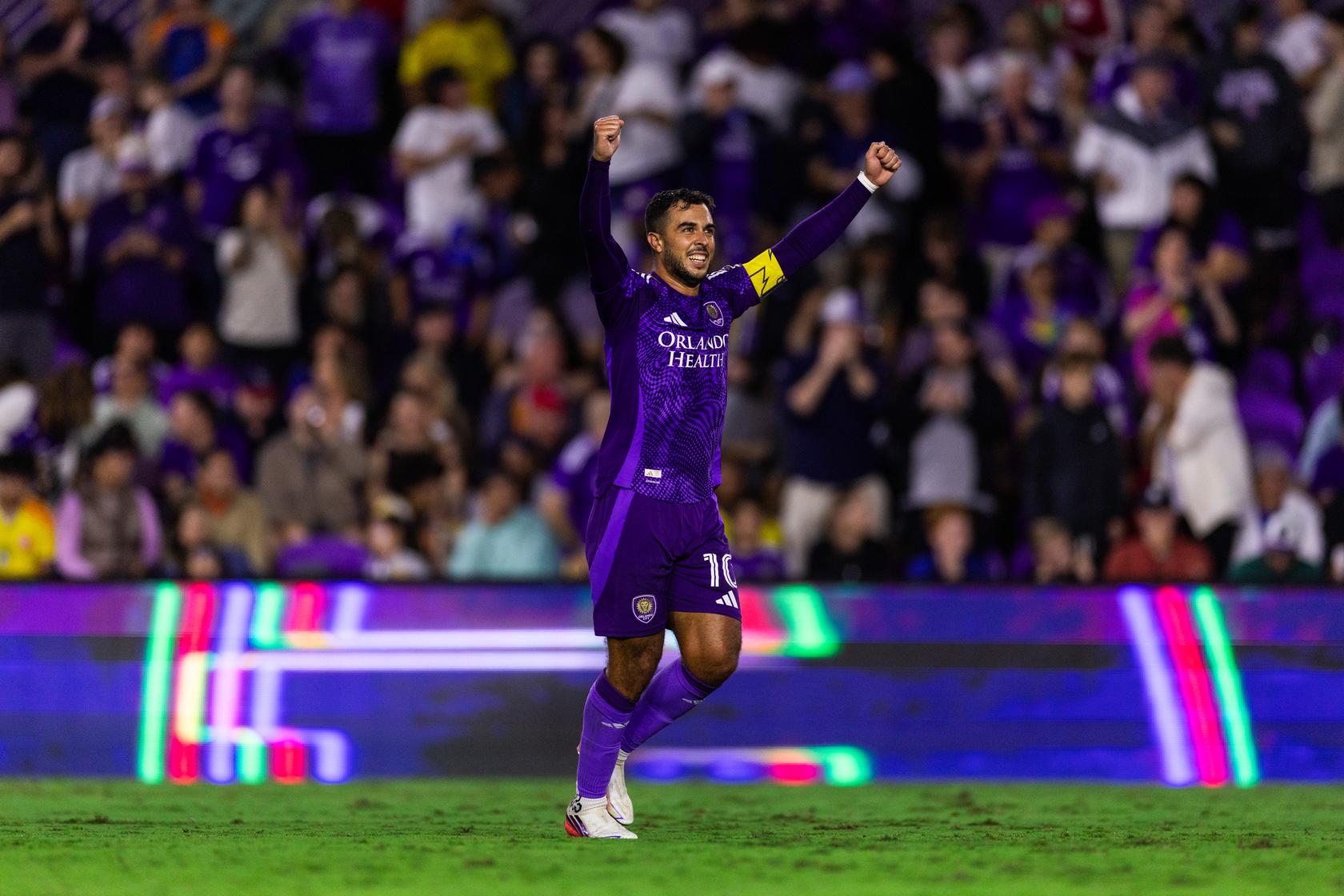
The offense dazzled while the defense avoided having its customary lapses become costly in Orlando City’s 4-1 home win over D.C. United. Daryl Dike, Martin Ojeda, and Antoine Griezmann combined on the best team goal all season for the opener, while Ojeda got cheeky with the second goal on a scorpion kick.
Let’s take a look at how Orlando City’s players rated in their matchup against D.C. United.
Starters
GK, Maxime Crepeau, 6.5 — It was a fairly quiet night for the Canadian goalkeeper as he only had to make three saves and the goal against him was from the penalty spot. In the moments when the lapses in the defense showed up, he was out there, correcting the mistakes. Two of his three saves came in the eighth minute on the only significant onslaught from D.C. all night. Crepeau had two successful long balls on the night and 76% passing accuracy.
D, Ivan Angulo, 6 — While Angulo brought all of his usual energy and endurance, his touches and decisions mostly let him down all night. He contributed on the defensive end but was mostly off on the offensive end. That said, even with his touch being off, his presence widens a defense and allows for the type of goals the Lions put in the net all night. Angulo was dispossessed three times and passed at a 91% percent rate while adding five defensive contributions and nine recoveries, showing the work put in on the defensive end.
D, Iago, 6 — It was a standard night for Iago, as he had a great long through ball in the 11th minute to break the defense but also had a bad giveaway at the 26-minute mark. As the central clearing house for the team, he had the most touches at 102 and passed at a 93% clip. He added a tackle, a block, and seven clearances. Of the two center backs, he was the more commanding one over David Brekalo and showed why, if given time, he could turn into a dependable center back.
D, David Brekalo, 5.5 — Brekalo had almost as many touches as Iago but there were multiple instances when D.C. United had free headers from his marks. None of them converted, but that doesn’t let him off the hook. He also had a bad turnover in the 85th minute. He was 86% accurate on his passes with two tackles, one block, and seven clearances.
D, Zakaria Taifi, 6.5 — The lineup was a little more standard with Taifi lining up in his right back role instead of forcing Angulo over there. Taifi didn’t stand out but, in a season of defensive miscues, not standing out can be a good thing. He was a willing runner, spreading out the D.C. defense, and provided a good outlet at times. In one of his aggressive moments, he ended up in the middle of the pitch and acted as an outlet to cycle the ball and got a secondary assist on Martin Ojeda’s goal. He only finished with a 77% passing rate but added two tackles and four clearances.
MF, Martin Ojeda, 8.5 — Orlando City’s all-time scoring leader would win Man of the Match in most games with an assist and an electrifying goal, but Griezmann exists doing Grizi things. Martin looped in a ball on a great give-and-go for the opening goal and then added his own goal in the 22nd minute that should win MLS Goal of the Week and potentially be on the ballot for MLS Goal of the Year. His passing accuracy was 86% and he’s rounding into form at the right time if this team is to do anything in the playoffs.
MF, Wilder Cartagena, 5 — It was a mixed night for Wilder. He failed to clear a dangerous cross in the 40th minute that fortunately turned into nothing. He then, inexplicably, bear hugged Sean Nealis on a corner kick, which referee Pierre-Luc Laziere awarded as a penalty when Nealis went to the ground. On the other hand, his aerial header forward on a D.C. clearance up the pitch led to the opening goal. Cartagena, who often dropped back as a de facto third center back to allow Angulo to go forward, passed at a 94% clip but that was the only item on the stat sheet. He was replaced by Joran Gerbet at halftime.
MF, Luis Otavio, 6.5 — Otavio continues to grow into his enforcer role in the midfield. While not shining in any moment, he was almost always present when D.C. was trying to move the ball forward and made himself a nuisance. He picked up a yellow card in the 38th minute with a tackle from behind that he thought he got cleanly. He passed at an 87% rate and recorded two tackles and two interceptions. He was subbed out for Braian Ojeda in the 70th minute.
MF, Eduard Atuesta, 6 — The team structure didn’t force Atuesta into defensive positions as often at it did in Wednesday’s game against Toronto FC and, as a result, Atuesta had a better game. While he was only 83% accurate with his passes, he tallied three key passes to open up the D.C. United defense. That includes a nice grounded cross that Angulo couldn’t finish. He was replaced by Adrian Marin in the 70th minute as Orlando City shifted into a more defensive shape.
F, Daryl Dike, 6.5 — In a rare start for the target forward, Dike was instrumental in setting up the first goal as he controlled the entry pass before laying it off to Griezmann. It was really his only positive control of the night as he seemed to not have the footwork to combine receiving a pass into an opportunity, but his holdup play was good, as he chested long balls down for his midfielders to run onto. Dike passed at a 61% clip and only touched the ball three times in the box. He was active defensively, chipping in two tackles and four clearances.
F, Antoine Griezmann, 9 (MotM) — The superlatives continue for the Frenchman and he has unofficially taken over Lionel Messi’s hold on the top-rated player in MLS according to FotMob. This game was a masterpiece worthy of the Louvre. A magnificent give-and-go to open the scoring, an excellent pass to Martin Ojeda for the second, and then active pressing work to pick off an errant pass in the D.C. defensive end for the third goal. Two goals, one assist, four key passes, three shots (all on target), and 83% passing all add up to a phenomenal game.
Substitutes
MF, Joran Gerbet (46′), 6 — Gerbet came on at halftime and helped provide more relief through the midfield. He missed just one of his 40 passes for a 98% passing rate but also didn’t add a ton defensively with a single tackle making up all of his defensive contributions.
MF, Braian Ojeda (70’), 6 — The Lions flexed their midfield depth all night as Braian Ojeda came on for Otavio. He was a perfect 15-for-15 on his passes and added a tackle and an interception.
D, Adrian Marin (70′), 5.5 — As Orlando City shifted into a more defensive shape late, Marin came on to act as the left side of the back three for his first appearance in almost two months. It didn’t go much better than his previous stints as he made a bad pass in the 87th minute that almost led to a breakaway. He finished with four defensive contributions, which is impressive in 20-plus minutes but it’s almost always the mistakes that make you wince at Marin.
F, Justin Ellis (70’), 6.5 — Ellis returned after nursing a small injury and continued to show the skills he brings. He logged two key passes in his limited time on the field, including the line-breaker to Marco Pasalic that led to the fourth goal. He connected on nine of his 11 passes and will surely work his way back into fitness to return to the starting lineup.
MF, Marco Pasalic (86’), N/A — Pasalic only played for nine minutes and, as such, won’t receive a grade but that doesn’t diminish his movement in the last action of the game. As Orlando City was clearing D.C. United’s attack, Pasalic went sprinting up the middle, opening a lane for Ellis to place a perfect ball at his feet. Pasalic took it in one-on-one vs D.C. goalkeeper Sean Johnson and slotted it by him. Pasalic is a tough player to figure out how to place in the lineup, as his game is more suited to taking chances throughout a game but, if he can prove a dangerous sub, Orlando City will have plenty of options late in the game.
That’s what I’ve got for the players in a celebration of an evening. Let us know how you saw the game in the comments below, and don’t forget to vote for your Man of the Match.
Lion Links
Lion Links: 10/19/26
Lions and Pride win, Robin Jansson has successful foot surgery, Americans abroad, and more.

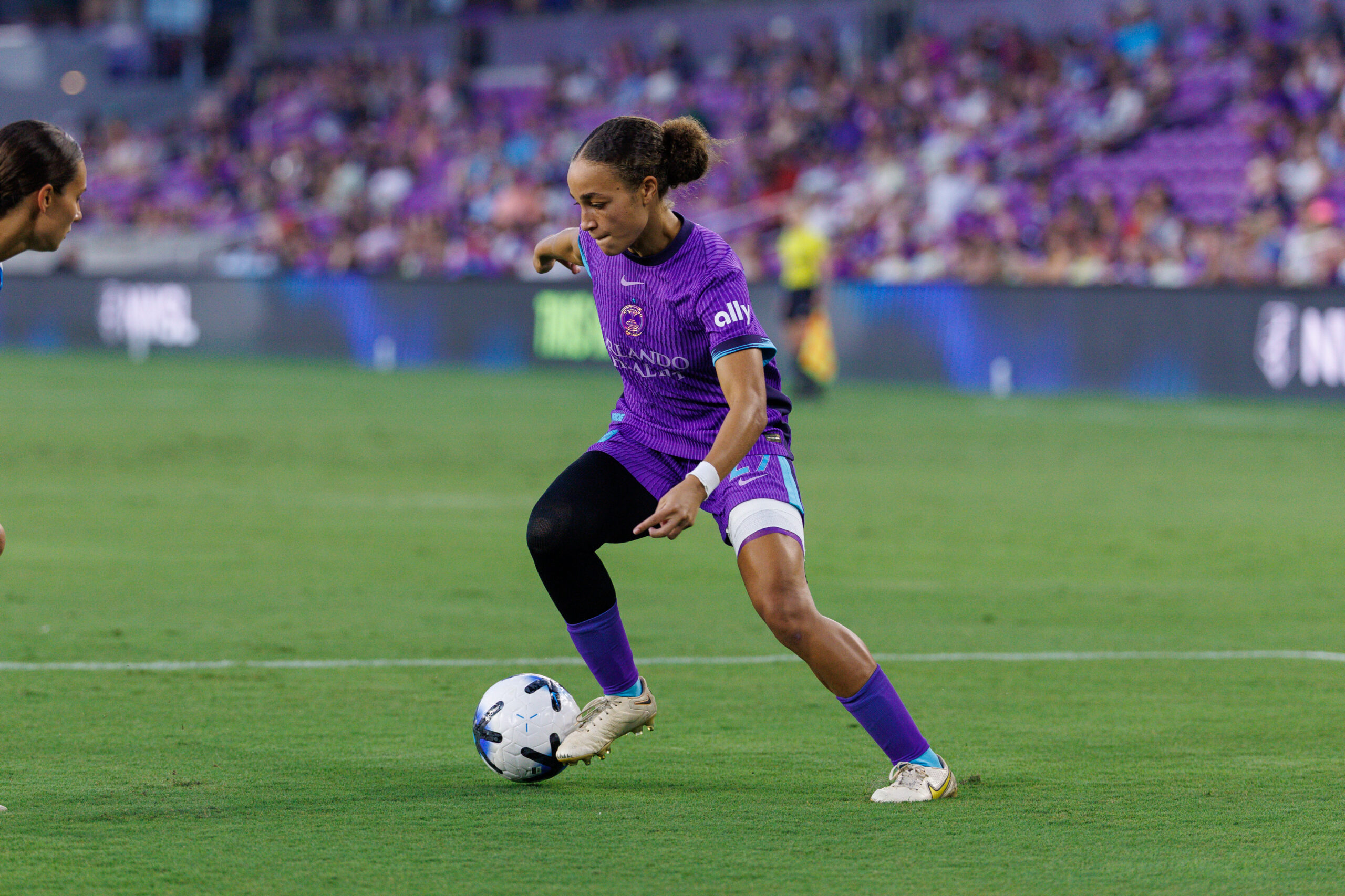
Hello, Mane Landers! I hope all is well with you down in Florida. I’ve been busy at work covering high school playoff football games. The Lions and Pride were in action over the weekend and both got results. Before we get started, let’s wish a happy birthday to Orlando Pride forward Jacquie Ovalle, who turns 27 today. We’ve got plenty to cover, so let’s get to the links.
Lions Defeat D.C. United at Home
Orlando City defeated D.C. United 4-1 on Saturday at Inter.co Stadium with another big performance from Antoine Griezmann. The club’s newest Designated Player scored the opening goal for the Lions and set up Martin Ojeda’s goal to double Orlando’s lead in the first half. D.C. United pulled one back with a penalty kick from Tai Baribo to make it 2-1 before the break. In the second half, Griezmann scored his second goal of the match, and Marco Pasalic added a goal late in stoppage time as the Lions picked up a crucial three points at home. Orlando City will host New York City FC on Saturday.
Pride Win at Houston Dash
The Orlando Pride got back in the win column on Sunday, beating the Houston Dash 2-1 at Shell Energy Stadium. The Pride struck first when Luana buried an early penalty kick on a foul won by Solai Washington, who later added another for Orlando to extend the lead to 2-0. In the second half, Houston pulled one back on a goal from Danielle Colaprico, but Orlando held on for the win. With the Seattle Reign’s win against the Chicago Stars on Sunday night, Orlando was officially eliminated from contention for a spot in the 2026 NWSL playoffs. The Pride will be back in action for their home finale on Sunday against Gotham FC.
Robin Jansson Has Successful Foot Surgery
Orlando City captain and defender Robin Jansson underwent successful foot surgery for a fracture in his right foot, the club announced on Friday. Jansson’s last match for the Lions was Oct. 10 against the Columbus Crew, where he played a full 90 minutes in a 3-2 win. The Swedish defender will miss the rest of the 2026 MLS season. We at The Mane Land wish Jansson a speedy recovery.
Americans Abroad
On Saturday, former Lion Alex Freeman played a full 90 minutes for Villarreal in a scoreless draw against Elche in La Liga. Gio Reyna scored for RC Strasbourg in the first half, but his side fell 3-1 to Paris Saint-Germain. On Sunday, Tyler Adams played 89 minutes for AFC Bournemouth in a 2-0 win against Sunderland. Christian Pulisic played 75 minutes for AC Milan in a 3-2 win against Atalanta, extending the club’s unbeaten streak to seven Serie A matches. Meanwhile, Weston McKennie played a full 90 minutes for Juventus in a 3-0 defeat against Lazio. Timothy Weah notched two assists for Olympique Marseille in a 5-2 victory against Angers in Ligue 1.
Free Kicks
- In case you missed it, here is another look at Martin Ojeda’s flying backheel goal, a potential goal-of-the-season candidate, in Orlando’s win against D.C. United over the weekend.
- Austin FC and forward Christian Ramirez have reached an agreement on a new contract extension that will keep him at the club through the 2027-2028 MLS season.
- Chelsea goalkeeper Emiliano Martinez is expected to return to the club in a few weeks after reportedly undergoing surgery for a fractured jaw sustained in a collision with Everton defender Jarrad Branthwaite during Saturday’s English Premier League match.
- FIFA’s controversial Peace Prize could be scrapped by year’s end after the inaugural award was given to U.S. President Donald Trump. The FIFA committee has reportedly told President Gianni Infantino to make major changes, such as depoliticizing the award or abolishing it.
- The U.S. Men’s Cerebral Palsy National Team defeated the Netherlands 4-1 on Sunday to win its group in the 2026 IFCPF World Cup and advanced to the knockout round.
That will do it for me today, Mane Landers. Enjoy your Monday, and I’ll see you next time.
Orlando City
Orlando City vs. D.C. United: Five Takeaways
What did we learn from a goal-heavy win at the purple palace on Saturday night?

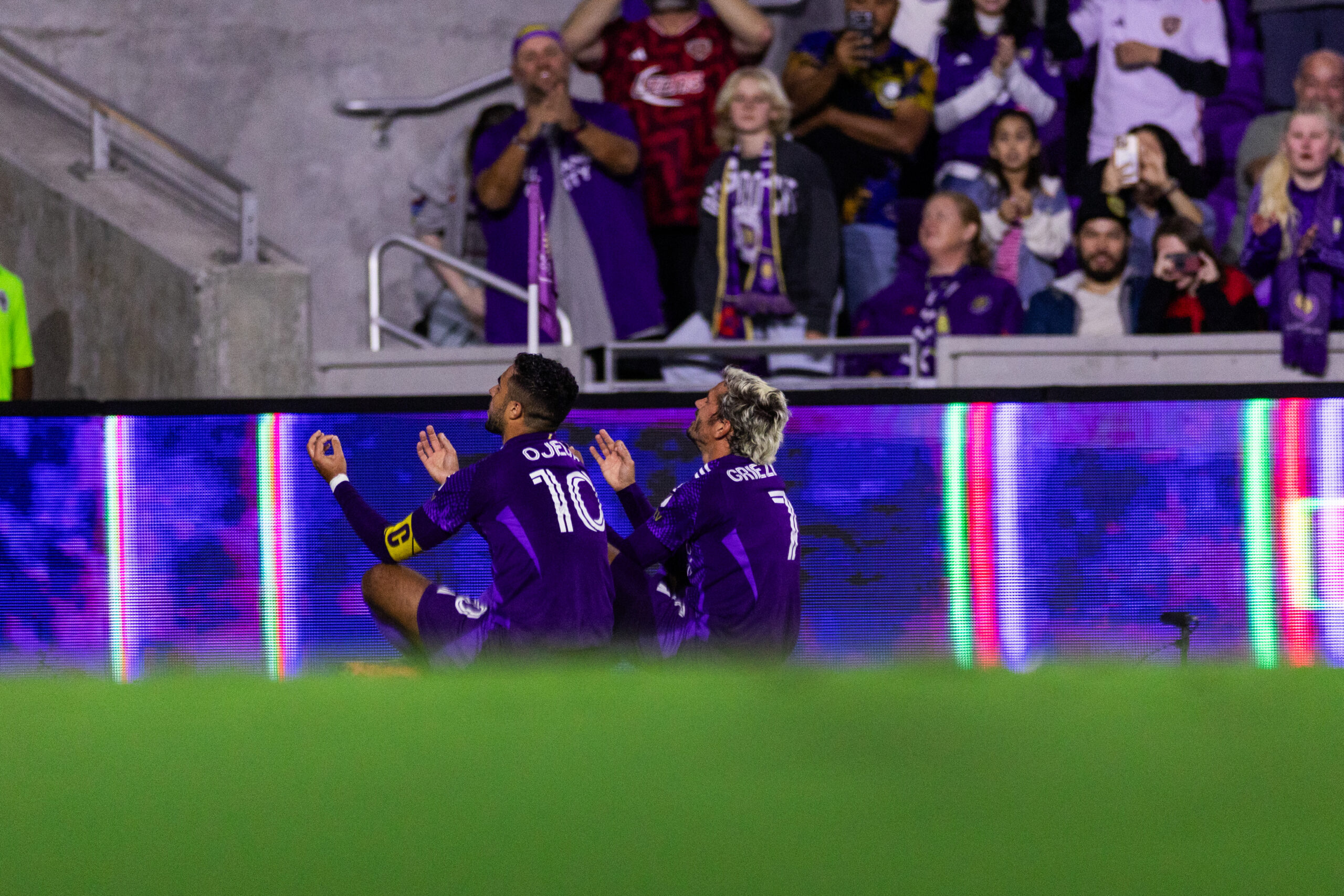
Orlando City rebounded from a disappointing midweek draw in style on Saturday night, as the team put four goals past D.C. United at home in a 4-1 win. The result means the Lions maintain five points of distance between themselves and the playoff line, while another five points separate them and the Philadelphia Union in sixth place. Here are my takeaways from the goalfest.
Makeshift Back Line Holds
Orlando was missing three starters on the back line for this one, with Robin Jansson out for the season, Griffin Dorsey still battling a back injury (for long enough that it’s starting to get legitimately concerning), and Vinicius Nogueira out with a shoulder issue he picked up on Friday. Add in the fact that Bernardo Rhein picked up a late knock, and the back line became a patchwork combination of Zakaria Taifi, Iago, David Brekalo, and Ivan Angulo. Thankfully, the defense got the job done, although there were some shaky moments at the beginning of both halves, which probably isn’t a coincidence. Once they got into a rhythm and settled down, they largely managed to limit D.C.’s danger, and it was quite refreshing to not watch OCSC ship multiple goals.
Neat Interplay Pays Dividends
For the most part, the Lions did well connecting and exchanging passes in tight spaces, particularly in the first half. There were moments of miscommunication, but Orlando’s movement and interplay in the final third gave D.C. some serious fits in the first half. Daryl Dike, Martin Ojeda, and Antoine Griezmann combined beautifully for the Frenchman’s first goal of the night, and if the visitors looked like they were chasing shadows, it’s because they were. At times, Orlando is guilty of trying to play too many passes once it gets to the edge of the box or even inside it, but the Lions did well to play through D.C., and got their just rewards for doing so. Speaking of…
Magic from Martin
My god. It would be a felony to not devote a full section to Martin Ojeda’s goal. The team’s all-time leading scorer has perhaps never bagged a better one for the Lions. A flying, half-scorpion kick backheel: it sounds ludicrous even typing those words out in the same sentence. This scored a goal:
First, the vision and execution from Griezmann to dink the ball over the top of the defense, and then the audacity and invention from Ojeda to flick his foot at it while moving the other direction and falling away. The ball actually started outside the far post, with the spin taking it just inside and into the side netting. I had quite literally a perfect view of the sequence from my spot behind the goal in The Wall, and still can’t believe it. Transcendent.
A Needless Penalty
The first half ended on a sour note, as D.C. was awarded a penalty kick, which Tai Baribo converted with aplomb. It was an extremely deserved penalty too, because Wilder Cartagena decided to bear hug his man during a corner for some reason, even after referee Pierre Luc-Lauziere looked to have given him a warning about doing so before the set piece was taken. It was a mind-boggling decision from one of OCSC’s usually reliable veterans, and it gave D.C. a foothold in the game right before halftime. On another night, against a better team, it could have proved much more costly, and hopefully that’s the last we see of those sorts of decisions this season.
Subs Slam the Door
I wasn’t happy with Martin Perelman’s substitution choices during Wednesday’s draw, but I’m happy to give credit where it’s due, and his changes were effective during this game. For one thing, he actually used all five subs (praise be), and the changes made sense within the flow of the game. Joran Gerbet entered for Cartagena at halftime and provided more vertical passing and creativity in the midfield as the Lions looked for another goal. Adrian Marin and Braian Ojeda provided extra security in midfield and the back line, respectively, while Justin Ellis made sure things didn’t get too defensive, and Marco Pasalic gave Martin Ojeda some much-needed rest. That’s not all either, because Ellis and Pasalic linked up supremely well to grab a fourth goal and put the game on ice for Orlando. It was especially good to see Marco back among the goals in a season that hasn’t been the easiest for him, and the Lions are going to need him if they’re want to hang onto a playoff place, much less make a run.
All in all, you couldn’t have asked for much more after a disappointing midweek result. It didn’t come against the strongest opposition, but you can only beat who’s in front of you, and at the end of the day, the Lions secured a valuable three points. They now get a precious week of rest before trying to avenge the 5-0 hammering New York City FC gave them on the baseball diamond earlier this year. What were your thoughts on this game? Be sure to let us know down in the comments. Vamos Orlando!


Orlando City vs. D.C. United: Player Grades and Man of the Match

Lion Links: 10/19/26

Orlando Pride vs. Houston Dash: Final Score 2-1 as Pride Ride Big First Half to Road Win


-
 Opinion1 week ago
Orlando City’s Final Playoff Push Filled with Challenges
-
 Orlando City1 week ago
Orlando City vs. Columbus Crew: Final Score 3-2 as Angulo Wins It Late for the Lions
-
 Lion Links2 weeks ago
Lion Links: 10/6/26
-
 Orlando City1 week ago
Orlando City vs. Columbus Crew: Five Takeaways
-
 Orlando City1 week ago
Orlando City vs. Columbus Crew: Preview, How to Watch, TV Info, Live Stream, Lineups, Match Thread, and More
-

 Orlando Pride2 weeks ago
Loss to San Diego Exposed Orlando Pride’s Roster-Building Failures
-
 Orlando City5 days ago
Orlando City vs. Toronto FC: Preview, How to Watch, TV Info, Live Stream, Lineups, Match Thread, and More
-
 Lion Links2 weeks ago
Lion Links: 10/7/26